
Mountain bike types: the 6 main MTB styles explained
Mountain bike types: Cross Country, Trail, Enduro, Downhill, Fat Bike and Dirt Bike: the different mountain bike styles and when to choose which type.

The different types and styles of mountain bikes:
- Cross Country – fast, light and agile
- Trail – all-rounder for climbing and descending
- Enduro – a true descender that you can also pedal uphill
- Downhill – a pure descender, you take a lift to the top
- Fat bike – extra wide tyres for loose surfaces
- Dirt bike – for bike parks with lots of jumps
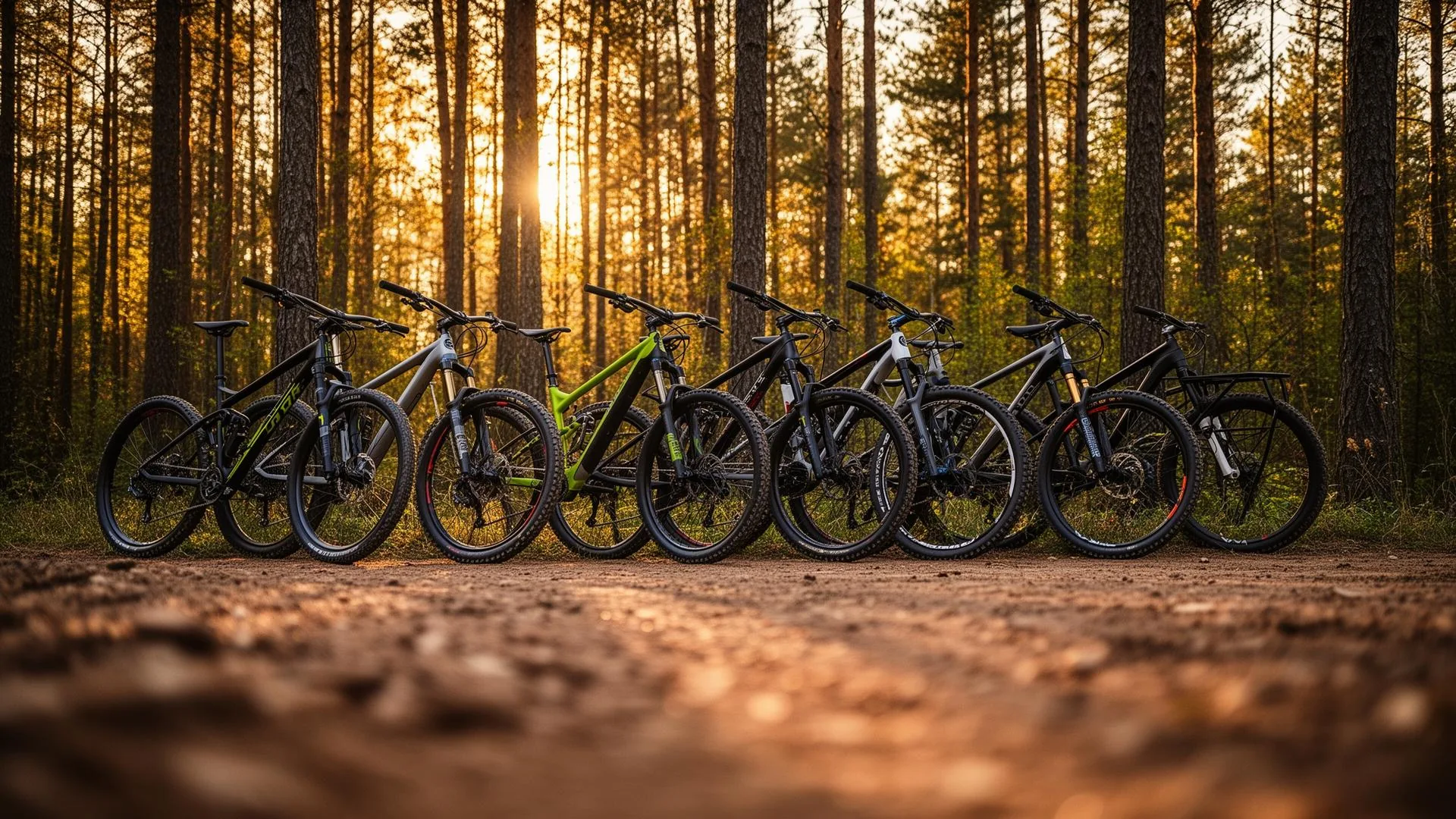
This guide on mountain bike types explains everything you need to know. The Cross Country or XC mountain bike is the most efficient type for flat and uphill cycling. The Trail bike is a true all-rounder that is used the most in countries with mountains. Below is a brief description with a photo of each type. The different types of mountain bikes are generally the easiest to recognise by their suspension travel (how many mm the suspension can be compressed), which is why we provide an indication for each category.
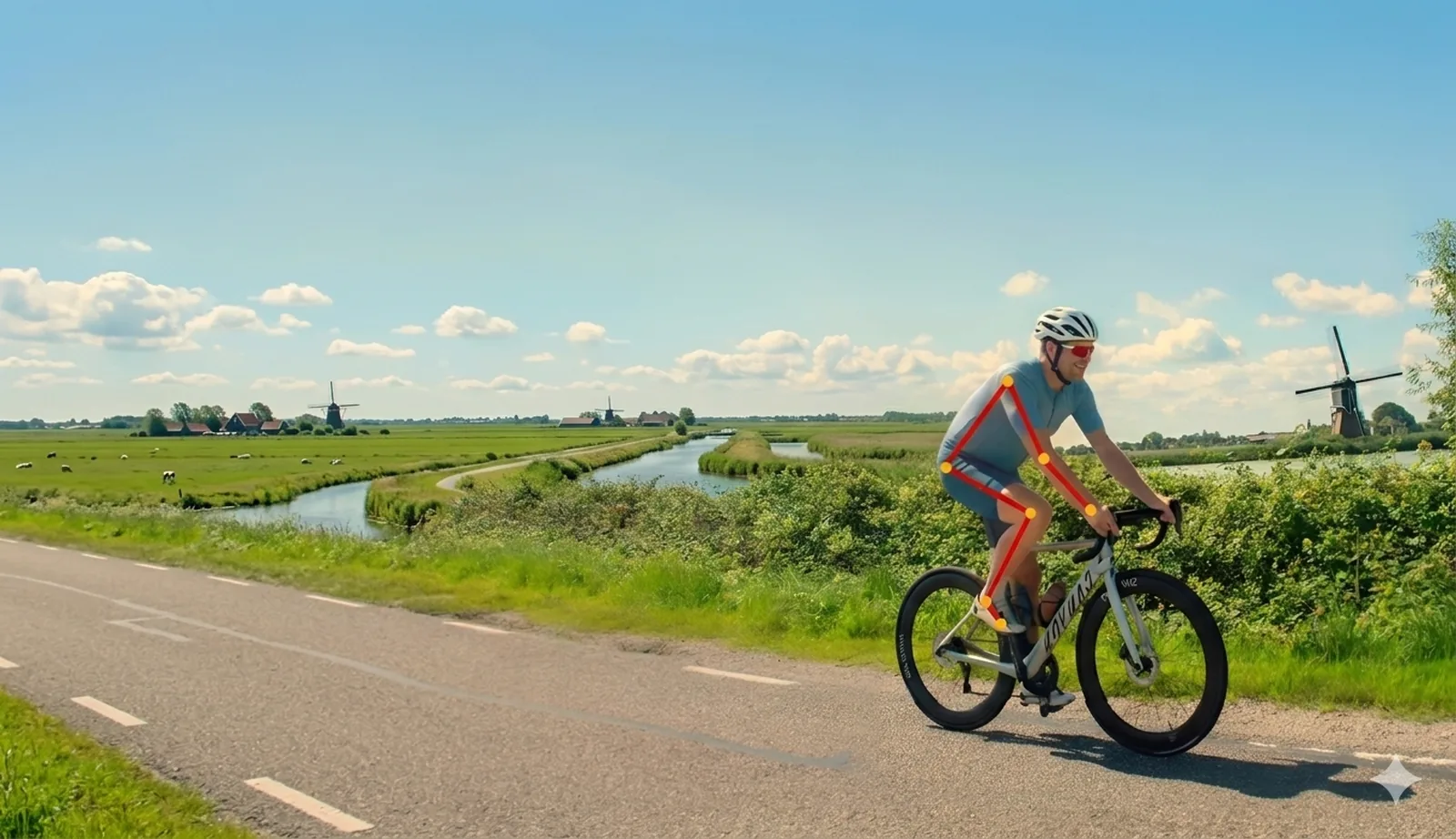
If you want to know which mountain bike type and model best suits your cycling goals, try our online bike fit. We will ask you a number of questions about your biking experience, goals and body measurements. Based on this information we advise which mountain bike is best for you.
Cross Country mountain bikes

With the cross country mountain bike (XC) the emphasis is on a fast, light and manoeuvrable bike. The range in this segment is very wide. The better XC bikes are ideal for racing on most mountain bike trails. The cheaper models are more suitable for beginners or for use on simple paths or on the road. That range makes XC one of the most accessible entry points into the category, most adult mountain bikes sold today fall somewhere in this segment, even if the rider never plans to race.
Most XC mountain bikes only have front suspension, also called Hardtail. However, there is also plenty of choice in XC mountain bikes with front and rear suspension (Fully). A Fully is approximately € 1,000 more expensive than a comparable Hardtail. The advantages of a Fully are: more grip and control, more comfort and less fatigue on long journeys. The disadvantages are the higher costs for both the purchase and maintenance and the higher weight of 0.6 to 1 kg. The suspension travel of an XC mountain bike is typically between 80 and 120 mm.
The XC mountain bike is the bike for all types of competitions where the emphasis is on fast cycling (not on jumps, tricks or fast descents). Examples include local cross country or beach races, the XC world cup competitions, and long multi-day marathon competitions, such as the Cape Epic.
Trail mountain bikes

Trail Bikes are designed as the all-rounder among mountain bikes. This is therefore the most sold type of mountain bike in many countries with mountains. With a Trail Bike you can both climb well and descent aggressively. A Trail Bike is slightly heavier and less agile compared to a Cross Country mountain bike. On the other hand, the Trail Bike is more robust and more stable in the descent.
Are you looking for a robust bike, or do you want to go on challenging mountain tours, then a Trail Bike may be the right choice for you.
Almost all Trail Bikes have front and rear suspension (Fully), but there is also a limited number of models with only front suspension (Hardtail). Choose a hardtail if you do not have the budget for a fully or if you are looking for the extra challenge of descending without rear suspension. The suspension travel of a Trail Bike generally varies from 120 to 150 mm. There are no specific race disciplines for Trail Bikes.
Enduro mountain bikes

The Enduro mountain bike is made for challenging fast descents. In contrast to a Downhill mountain bike (see below), you can also cycle uphill with an Enduro bike. Enduro mountain bikes always have front and rear suspension with a travel between 150 and 170 mm.
Enduro competitions have a special design: the competition element is the amount of time you need for a number of technical descents. Between those successive descents you have to cycle up again yourself to the next starting point. The time you need for that does not count for the race, as long as you stay within a preset time limit for each climb.
Do not confuse Enduro with endurance for long mountain bike rides. You don't want to ride a mountain bike marathon on an Enduro bike. Then choose a Cross Country bike.
Downhill mountain bikes
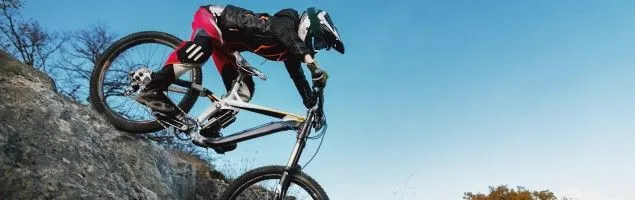
Downhill (also known as Gravity) is all about one thing: cycling down as fast as possible. Everything about these bikes has been optimised to take technically challenging downhill runs as fast as you dare. As a result, these bikes are very robust and heavy, and have a saddle position that is ideally suited for descending. Cycling on these bikes is a challenge. That is why you go up with a ski lift or car.
For Downhill you should wear a full-face helmet and body protection. A Downhill bike naturally has front and rear suspension (Fully), with the largest suspension travel of all mountain bikes types (170 - 210 mm).
Downhill is a special competition discipline for mountain bikes where it's all about descending.
Fat Bikes

Fat bikes have extremely wide tyres with which they can easily ride over loose surfaces such as sand and snow. These bikes are popular with adventurers who like to cycle off the paths and with people looking for something else, with a high fun factor or a tough appearance.
Most Fat bikes have no front or rear suspension (Rigid) because the thick tyres can absorb most bumps on the path.
Dirt Bikes

Dirt bikes are very similar to large BMX bikes and are made for use in so-called bike parks with jump and pump tracks. They are compact, strong bicycles, with no or a short front suspension, and often only equipped with one gear. The saddle is very low and is only for resting.
Because the bike is compact and has very little suspension, it steers very directly. Perfect for tricks and jumps, but less suitable for longer rides in the woods.
Ready to optimise your bike fit?
Get a personalised bike fitting report in just 15 minutes.
Start your bike fit