
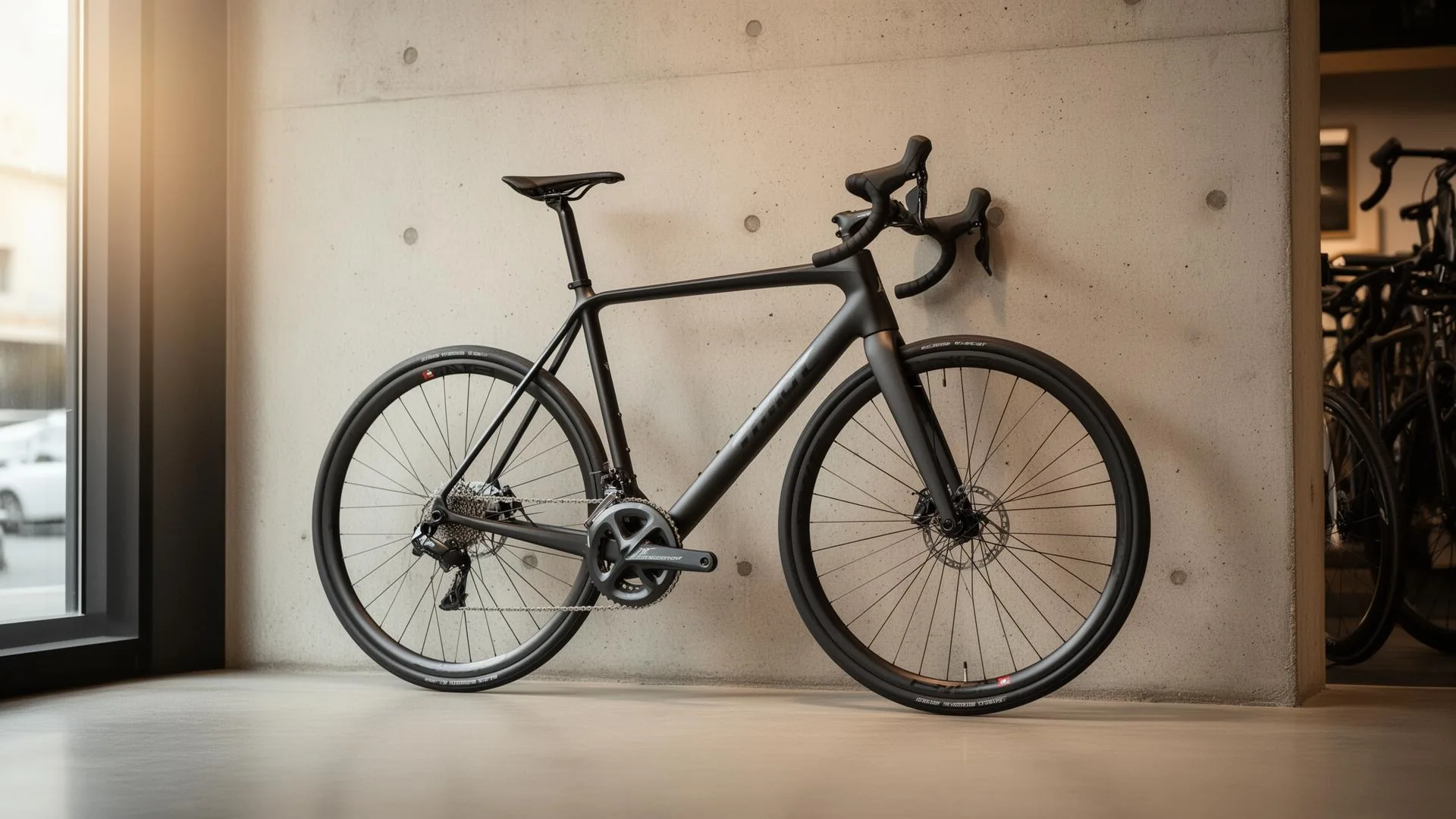
What road bike frame size do I need?
Why height and leg length aren't enough, and how stack and reach really decide your Road bike frame size.

Choosing the right road bike frame size is essential for an optimal cycling experience. The correct frame size and bike setup are essential for your comfort and to prevent pains and injuries. Additionally, with the correct riding position you also cycle more efficiently and faster.
Unfortunately, it is common practice to advise a road bike frame size based on your height or leg length. This is an easy but not a good method. The correct method to determine your ideal frame size is more complex. We will explain in detail how bike size matters in this article.
We can help you in finding your optimal frame size. Our online tool provides personal frame size advice based on your desired riding position and for the bike model of your choice.
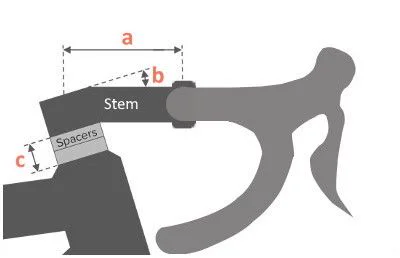
We also have a number of other online advice tools. We offer an online bike fitting to find your ideal riding position, and the Bike Setup Tool to calculate which parts are needed to achieve your optimal riding position (seatpost length, stem length, stem angle and spacers).
Please read on if you want more information on how to measure and determine your road bike frame size.
Do not choose a road bike frame size based on your height or leg length
Determining the frame size based on your height or leg length is like buying jeans based only on their length, while hoping that the waist will fit as well. You might want to take the chance with a pair of jeans, but this is certainly not recommended when buying a road bike. If a pair of jeans does not fit properly, you often have a few others hanging in the closet. If a bicycle does not fit properly, it can result in poor performance, pains and injuries.
The two most important elements of your cycling position are the position of the saddle and the position of the handlebars. The frame size only tells you something about the possible saddle heights. It does not provide information about the possible position of the handlebars.
Two people of the same height may require a completely different frame size. For example, someone with relatively short legs will need a larger frame size compared to someone of the same height with relatively long legs. This sounds contradictory, but it certainly is not. We will explain why further below.
A frame size is based on the seat tube length (and therefore saddle height). And although the saddle height is the most important bike setting, it is not that important in determining your frame size. You can usually adjust the saddle height for more than 20 centimeters. And therefore, you will be able to realize your desired saddle height with several frame sizes of the same bike model. Much more important for selecting the right bike size are the stack and reach of the frame, because these have a very small adjusted range. And you often have to replace bike parts to make an adjustment (e.g. replace the stem).
The reach is the horizontal distance from the centre of the bottom bracket to the centre of the top of the head tube. The reach, therefore, determines the saddle-handlebar reach (horizontal distance from saddle to handlebars) of your bicycle. If we now take the example of a person with relatively short legs, then this person automatically also has a relatively long torso. Due to the short legs, his saddle is lower and more forward than someone with an average leg length. And because of his relatively long torso, the handlebars must be placed further away from the saddle. In other words, the person with relatively short legs needs a much longer frame (larger reach), and thus a larger frame size. For almost all road bike models, the saddle of the larger frame can be set low enough for this person's relatively short legs.
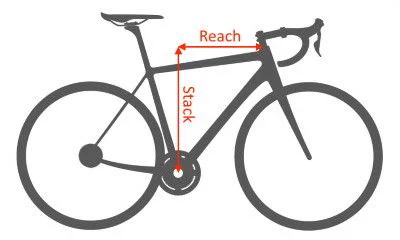
The stack is the vertical distance / height difference between the centre of the bottom bracket and the centre of the top of the head tube. Your optimal stack mostly depends on your desired riding position. If you want a deep aerodynamic position, your handlebars must be placed very low, and you need a small stack. If you want more comfort and sit relatively upright, you need a much larger stack. That is why many professional cyclists ride on a much smaller frame size than you would expect based on their height.
How to determine your road bike frame size using stack and reach
As you could read, choosing the right frame size is quite a complex matter. That's why we've made this easy for you. For our advice, we ask you a few simple questions about your cycling goals, desirable riding position and body measurements. With this information we calculate which bike geometry you need.
As part of this advice you receive a stack and reach range. With this information you can check which bike models and frame sizes are suitable for you. We can also use your bike fit to calculate, per road bike model, which frame size is most suitable for you. In this advice you also get advice on the optimal cockpit setup: the parts that determine the position of the handlebars (see the image below).
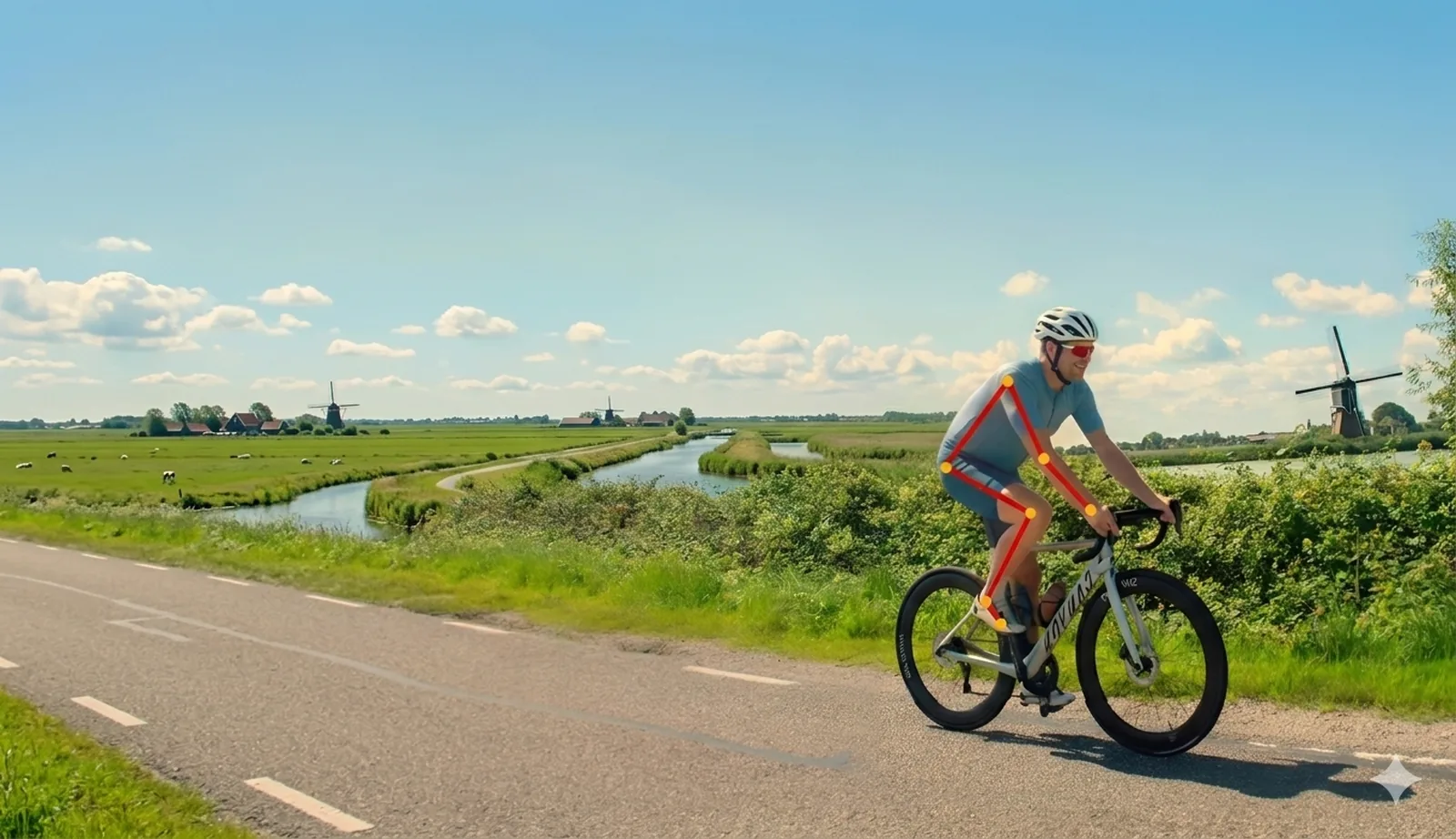
Ready to optimise your bike fit?
Get a personalised bike fitting report in just 15 minutes.
Start your bike fit