

Saddle angle: how to set up your road bike or MTB saddle tilt
Saddle tilt: How to set up the saddle angle on your road bike or mountain bike, horizontal or with the nose slightly down.

The correct saddle angle (also known as seat angle or saddle tilt) is much more important than most cyclists realize. Lower back pain is a common issue for cyclists, and an incorrect saddle angle is often (part of) the problem. The guideline for the angle of your saddle is between 0 degrees (perfectly horizontal, measured with a spirit level) and 4 degrees nose down. Be aware that 1 degree can make a big difference. Determining the optimal angle is very personal and also depends on the type of saddle you have.
The saddle tilt is only a small part of your cycling position. You can also do a full online bike fit with us so that you can cycle more comfortably, longer and faster.
Determine your saddle angle
You can determine the optimal angle for your road bike or mountain bike saddle by first setting it perfectly horizontal, then taking a one-hour test ride. If your saddle does not sit comfortably, lower the nose by 1 degree for the next test ride. Repeat until you have found your perfect saddle angle.
When is the tip of your saddle too far up
- If your pelvis is not tilted properly while cycling / too much curve in your back (see picture)
- If you have too much weight and pressure on the front of your saddle, and the front becomes painful (over time)
- If you have problems with your lower back while cycling

When is the tip of your saddle too far down
- If you are not stable and for example always slide forward on your saddle
- If you have too much weight and pressure on the wrists and hands, tingling sensations or numbness
Saddle angle for mountain bikes
On a mountain bike you ride different terrain than on a road bike and you spend more time out of the saddle or on steep climbs. Many MTB riders therefore set their saddle slightly flatter than road riders, or with the nose only very slightly down to prevent sliding forward on steep climbs. If you have a dropper post, it does not change the saddle angle, only the height. Start here too with the saddle perfectly horizontal and adjust in 1-degree steps.
How to measure the saddle angle
Some practical tips for measuring the saddle angle. Most saddles are not flat. Therefore, place a hardback book or a small board on the saddle to measure the angle properly. Preferably use a digital spirit level. You can also download a spirit level app on your phone. Make sure that the phone lies flat on the board. Sometimes the camera protrudes, which can cause the phone to lay skewed.
There is a great diversity of saddle shapes. For example, if you have a saddle with a high rear end, you will probably end up with a larger saddle angle compared to a flat saddle.

How to set the saddle angle
Usually you can adjust the saddle angle with the connection of the seat post to the saddle. With some seat posts this is only possible in small steps, but luckily there are more and more stepless seat posts. In many seat posts, the horizontal position of the saddle (saddle setback) is fixed with the same connection. You then have to make sure that you have both the saddle setback and the saddle angle correct when you tighten the bolts.
Help with other bike adjustments
We would like to also help you with the optimization of other elements of your bike setup. The most complex is finding your optimal riding position. This is complex because there is not one standard optimal position. Aerodynamics, maximum power, comfort and bike control all have different requirements for your riding position. Your personal cycling goals and priorities therefore play an important role in determining your optimal riding position.
For more explanation, please read our article What is your ideal riding position on the bike.
When determining the riding position, the positions of all your contact points (pedals, saddle, handlebars) with the bicycle are determined. In addition to the correct position, it is also important to optimise the contact points themselves. The articles behind the links below provide important tips and advice on how to do this. How do you determine your optimal:
Want to know exactly which measurements suit your body? Take our online bike fit and get your personal report right away.
Related articles
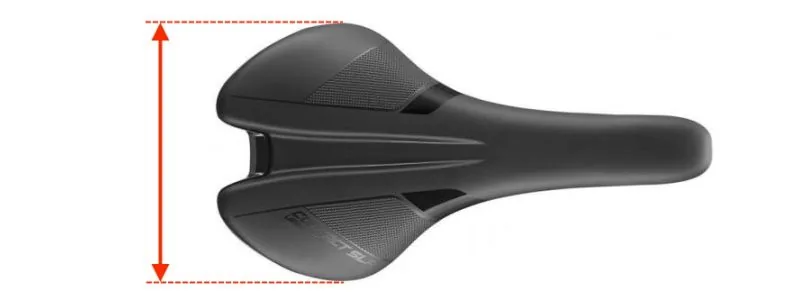
Saddle width sit bones: how to find your optimal saddle width
Saddle width sit bones — Easy instruction to determine the saddle width for a road or mountain bike. How to measure sit bone width and translate it into your saddle width.
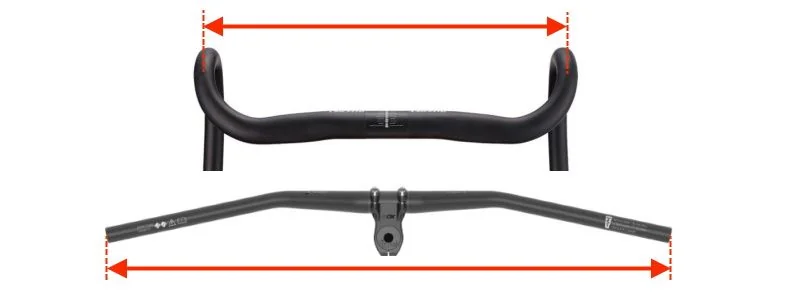
How to determine your optimal handlebar width?
Easy instruction to determine the best Handlebar width for your road bike, gravel bike or mountain bike.
Ready to optimise your bike fit?
Get a personalised bike fitting report in just 15 minutes.
Start your bike fit