
Back pain cycling: causes & fix by type
Back pain cycling: From lower back pain after cycling to mid and upper back pain between the shoulder blades: how the right bike setup fixes it.

This guide on back pain cycling explains everything you need to know. More than a third of road cyclists and mountain bikers experience back pain while riding, and lower back pain is by far the most common complaint. If your road bike hurts your back, you're not alone, and in most cases the right bike setup makes the difference.
Cycling related back pain can have various causes. In most cases it's caused by an incorrect cycling position. Other causes can be: overloading from increased or altered cycling activities and/or underlying physical problems such as insufficient core stability.
A wrong cycling position is usually easy to solve by changing your bike setup. However, determining the best bike riding position for your back is not easy. To help you with this, we developed an online bike fit tool that calculates your optimal riding position based on your physique and cycling goals.
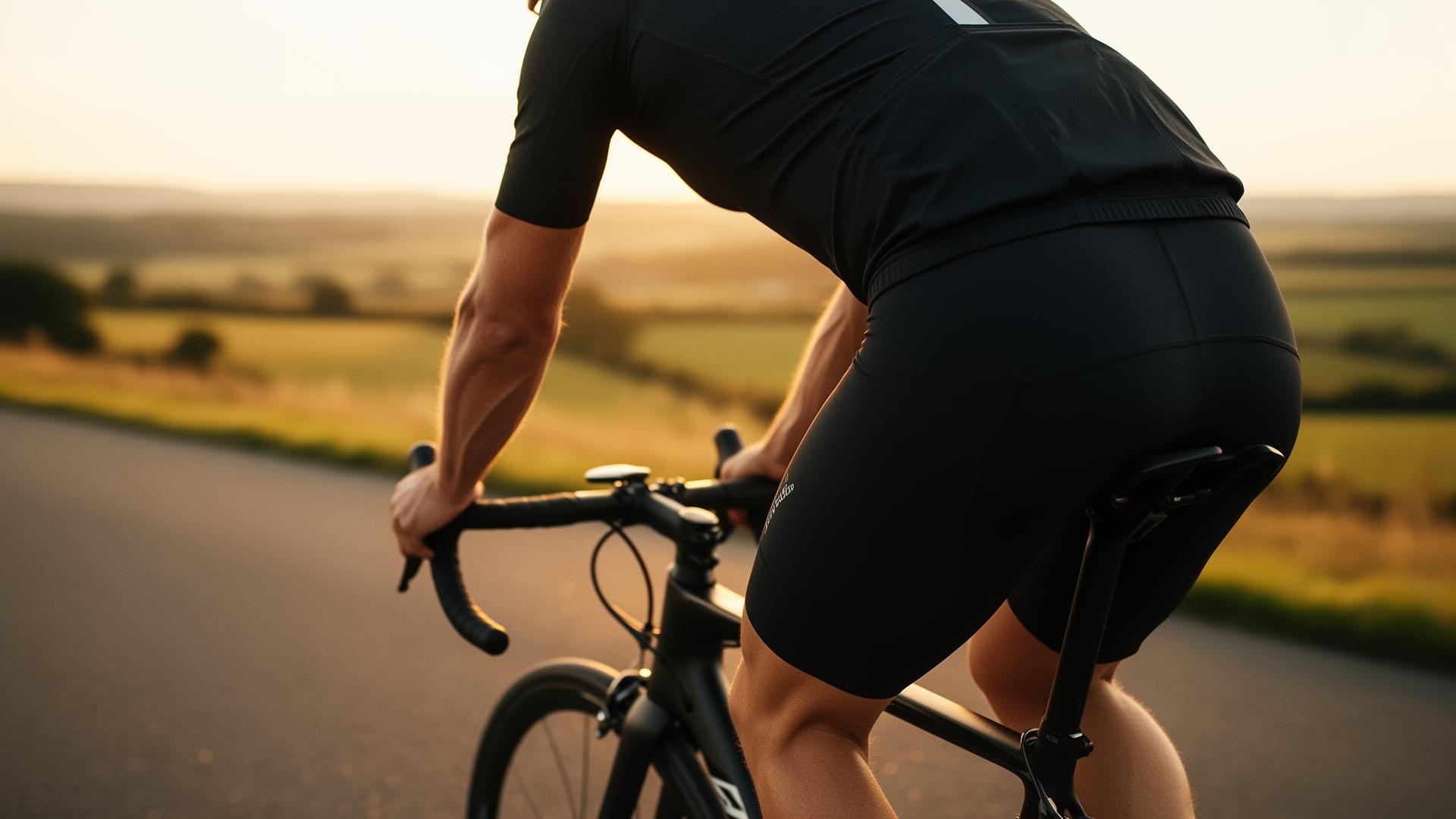
The different types of back pain in cycling
There are different types of back pain during and after cycling: lower back pain, mid back pain and pain between the shoulder blades. For each type we explain the causes and how to prevent it. With the right bike setup, cycling is good for your back and you'll enjoy your rides much more.
Central lower back pain cycling
Central lower back pain in cycling is often caused by too much tension on the lower back. This tension is usually caused by an incorrect handlebar and/or saddle position, exactly where the right bike setup makes the difference.
Handlebar position
If your handlebars are too close to your saddle, this will result in a curved back. If your handlebars are too far away, your back will be too stretched out. Both can result in lower back pain after cycling. With our online bike fit you can easily determine your optimal handlebar position.
Saddle tilt
An incorrect position on the saddle is also a common cause of lower back pain. If your pelvis is not tilted enough, the lower back has to make a sharper bend, with possible back problems as a result. The saddle tilt largely determines the amount of pelvic tilt.
Saddle shape
If a saddle shape does not suit you well, you will not be able to tilt your pelvis comfortably, even if you have the correct saddle tilt. Because you want to relieve pressure on the sensitive private parts, you put extra tension on the lower back. The ideal saddle shape is personal. Important factors are the width of the saddle and, for example, the presence of a groove or indentation in the middle.
Unilateral lower back pain cycling
Unilateral lower back pain usually has an asymmetrical cause. For example, your saddle may be rotated or you might have a difference in leg length. A leg length discrepancy can often be addressed with shims between the shoe and the cleats. How to make a proper correction can best be evaluated by a bike fit specialist.
Mid & upper back pain cycling: pain between the shoulder blades
Handlebar width
Mid back pain in cycling and pain between the shoulder blades is often caused by handlebars that are too wide. A wide handlebar puts excess strain on the trapezius muscle (imagine doing push-ups with your hands very wide).
Handlebar position
Another common cause of upper back pain cycling is that the handlebar is not in the correct position. For example, too much of your weight rests on your arms, or you cannot relax your shoulders and arms while cycling. You can easily determine the correct handlebar position with our online bike fit tool.
Hand position
Incorrect hand positioning on the handlebar can also lead to more tension in your arms and back. You want your wrists in a neutral, relaxed position. To achieve this you need to make sure that the handlebar tilt and the position of the brake levers are correct. Mountain bikers can also consider using ergonomic grips. The distance between the brake lever and the handlebar is also important to avoid too much tension.
Best bike riding position for a bad back: preventing back pain cycling
To prevent back pain cycling, it is essential to pay attention to the ergonomics of your cycling position and the corresponding bike setup. The best bike riding position for a bad back is one that suits your body. A thorough analysis of saddle and handlebar position, saddle shape and possible leg-length difference can make a real difference.
Underlying physical problems
Do you not only suffer from your back when cycling, but also when standing for a longer time or during longer walks? Then you might have an underlying physical problem. It is wise to visit a physical therapist or (sports) doctor for an examination.
Want to know exactly which measurements suit your body? Take our online bike fit and get your personal report right away.
About the author
Karin is a sports physician at Meander Medical Center in Amersfoort and, since December 2025, Chief Team Doctor of the FDJ-SUEZ Women's WorldTeam. Before that she was team doctor at Liv Alula Jayco and worked for over 15 years as a sports physician, specialising in exercise testing, injury prevention and bikefitting for cyclists and triathletes. She is a training supervisor in sports medicine and conducted research on health in youth sports (HAYS study, Utrecht University of Applied Sciences).
Related articles

Knee pain cycling: how to fix knee pain from cycling
My knees hurt when cycling, why? Learn the causes per type of Knee pain cycling (kneecap, outside, inside, back) and how bike setup fixes it.
Road bike saddle setup: saddle height and setback guide
Road bike saddle setup, step by step: correct saddle height, saddle tilt and setback for your body. Prevent pains and ride faster with the right setup.
Ready to optimise your bike fit?
Get a personalised bike fitting report in just 15 minutes.
Start your bike fit