
Dynamic vs static bike fit: which method suits you?
Dynamic vs static bike fit: An honest comparison based on scientific research, our own tests and practical experience.

This guide on dynamic vs static bike fit explains everything you need to know. You want a bike fit. But which method do you choose? A dynamic bike fit where you ride on a trainer and your movement is analysed? Or a static bike fit based on your body measurements?
The honest answer: both methods have serious pros and cons. And they're rarely put side by side honestly. Most comparisons come from bike fitters selling their own dynamic service.
Both methods can produce good results, but with both, reliability depends heavily on the provider. With static bike fits, the difference between simple rules of thumb, free marketing tools and professional tools is enormous. With dynamic bike fits, research from Ghent University (2019) shows that nine different fitters gave advice that varied by up to 3 cm for the same cyclists. A reliable dynamic vs static bike fit should account for these factors.
For the vast majority of cyclists without specific physical complaints, a good static bike fit is reliable, affordable and consistent. A good dynamic bike fit looks at your actual pedalling motion and is considered the gold standard, but is more susceptible to measurement errors than most people think. Do you have specific physical problems, such as a leg length discrepancy or serious back issues? Then a dynamic bike fit with a specialist with a medical background is the better choice.
What is a static bike fit?
In a static bike fit, you are not measured while cycling. Historically, measuring joint angles with a goniometer while sitting still on the bike also fell under this heading, but that variant is hardly offered as a standalone service anymore. Dynamic video analysis has taken over that role. This is exactly what a good dynamic vs static bike fit method considers.
What you encounter in practice as a "static bike fit" today is a calculation based on your body measurements: inseam, arm length, torso length, foot length and sometimes additional variables. The result is a set of numbers: saddle height, setback, handlebar position, frame size.
There are different variants, and they differ enormously in quality:
Simple rules of thumb. The best-known is the Hamley formula: inseam × 1.09. Or the LeMond method: inseam × 0.883. These formulas use only one variable and are therefore 10 to 25 mm inaccurate for many cyclists. In our article on calculating saddle height we explain why.
Free online bike fit tools. These are offered by bike shops and bike brands to guide you towards a purchase. Because the bike fit is not the core business of these companies, expertise and development budget are limited. The methodology is often based on the same simple rules of thumb. We tested several free tools: some produced reasonable results, others were completely wrong.
Professional bike fit tools. Paid tools where the bike fit is the core business. These include more variables: besides inseam, also foot size, crank length, flexibility, torso length and cycling goal. Because the provider's existence depends on the quality and reliability of the bike fit, accuracy and service are typically significantly better than with free tools.
What is a dynamic bike fit?
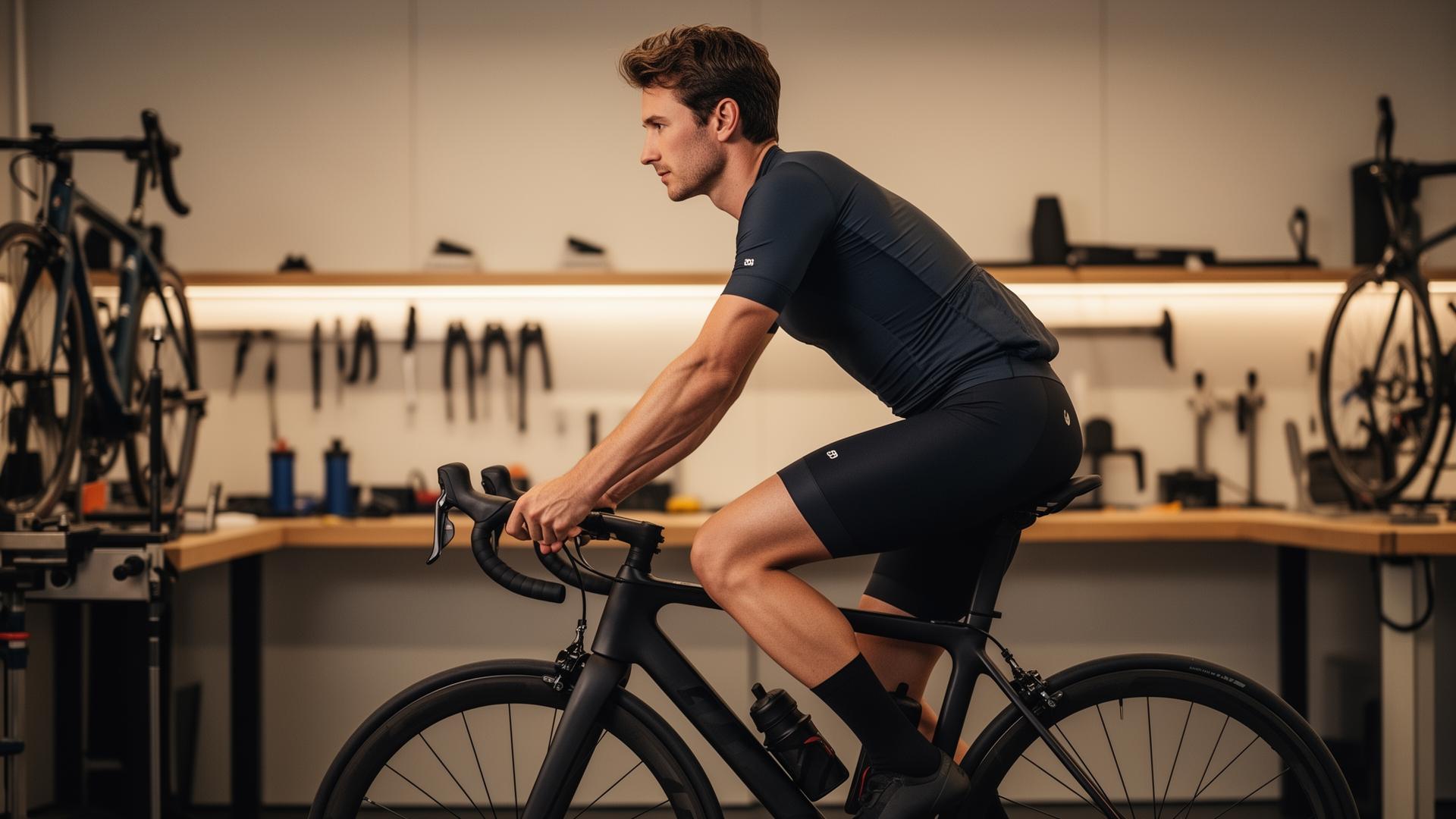
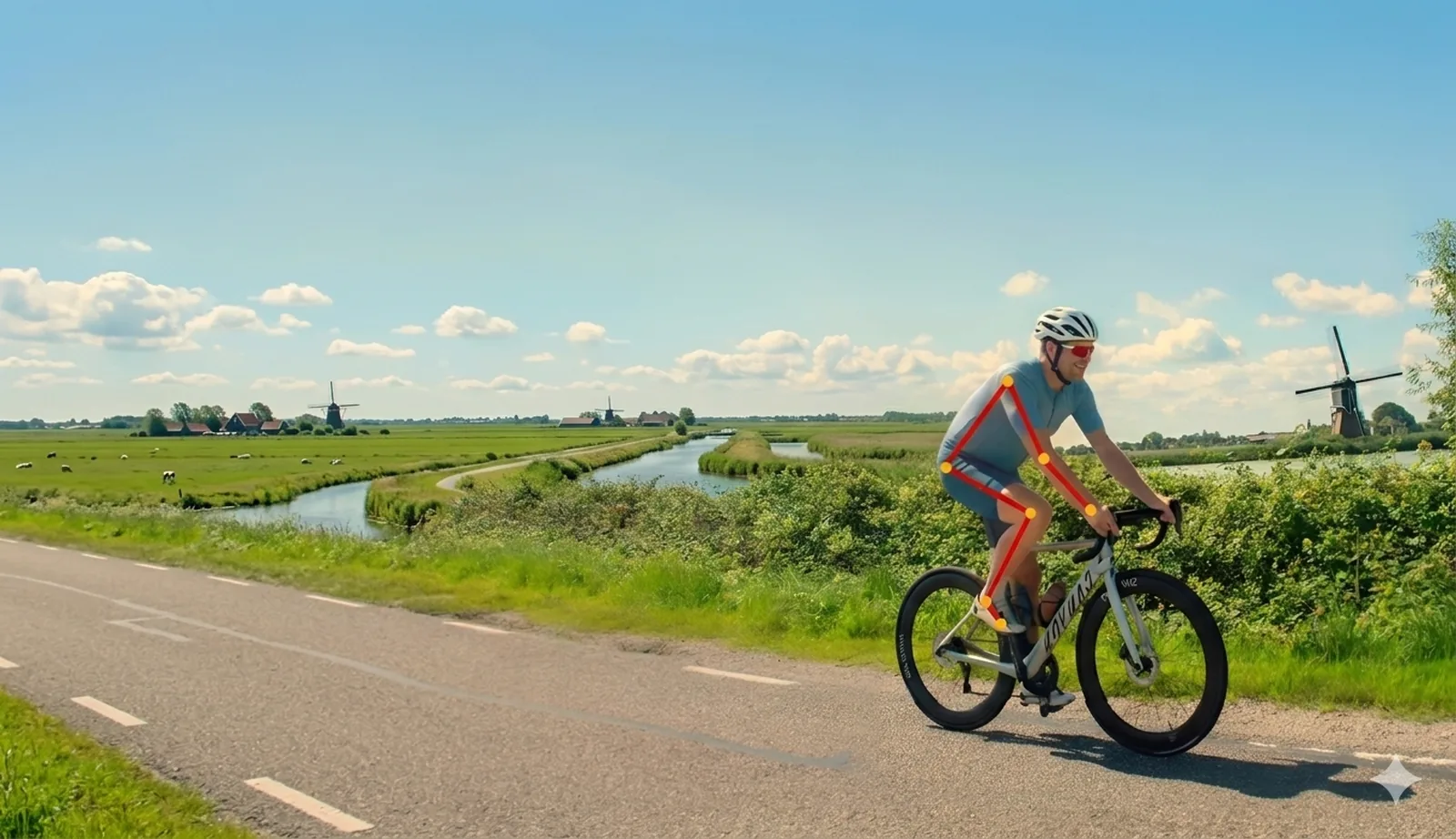
In a dynamic bike fit, you actually ride, usually on your own bike on a trainer, or on a special fitting bike. While you pedal, your movement is analysed. The fitter (or an AI tool) measures angles in your body: knee angle, hip angle, ankle angle, shoulder angle. Keep this in mind whenever you use a dynamic vs static bike fit.
Here too, different variants exist:
Video analysis by a fitter. The fitter films you from the side, pauses the video and measures the angles. Sometimes supplemented with saddle pressure measurement or a physical examination beforehand.
3D motion capture systems. Systems like Retül or Bioracer Motion attach sensors or markers to your body and track your movement in real-time and in three dimensions.
AI video tools. Relatively new. You film yourself with your phone and an algorithm analyses your angles. Accessibility is high, but accuracy varies greatly per tool.
The reference values for knee angle at maximum leg extension vary considerably per source and measurement system. Classic goniometer measurements used 25-35°. Dynamic systems often use higher ranges: Retül uses 34-40°, other sources mention 35-45°. This difference in guidelines is itself a source of variation in results. Moreover, even within one guideline, the range is often about 10 degrees wide, which for a cyclist with average leg length corresponds to 2 to 3 centimetres difference in saddle height.
Advantages of a dynamic bike fit
Looks at your actual cycling dynamics
Your position on the bike is different from when stationary. Your pelvis tilts, your ankles move, your back bends differently under load. A dynamic measurement captures all of this. Research by Corbett and Bevins (2014) confirms this: the knee angle was on average 5.4° greater during pedalling than in static position, largely because cyclists drop their heel more when stationary.
Sees deviations that a static measurement misses
An abnormal ankle angle (for example structurally pedalling with heels down), a kink in the back, a tilt of the pelvis or a knee that collapses inward: these are things that are only visible during pedalling. For cyclists with specific physical characteristics, this is a major advantage.
Limitations of a dynamic bike fit
Remarkably little is written about the limitations of a dynamic bike fit. Reality is more nuanced than most comparisons suggest.
Measurement errors are larger than you think
Measuring body angles on video sounds precise, but there are multiple error sources that together can easily produce more than 10% measurement error:
Lens distortion. Every camera lens distorts the image slightly. Straight lines become slightly curved, especially at the edges. This distorts the measured angles.
3D to 2D flattening. Depth information is lost in video. Points at different distances from the camera appear to be at the same distance in the 2D image, causing perspective error.
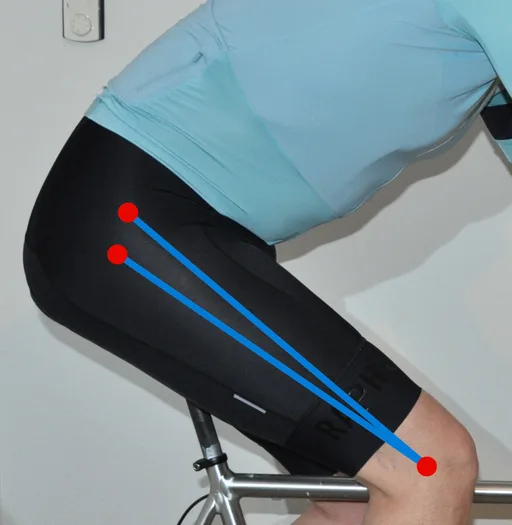
The hip pivot point shifts. The exact pivot point of the hip joint is not visible on the outside of the body; it is estimated. That estimate shifts from frame to frame. We overlaid the estimated pivot points from two video frames of an AI bike fit tool. The difference was immediately visible, with a significant impact on the measured angle.
Camera setup. Is the camera not perfectly perpendicular to the cyclist, at the right height and distance? Then additional perspective error occurs.
Add these error sources together and a measurement error of more than 10% is realistic when measuring angles in video. And a difference of a few degrees in knee angle quickly translates to centimetres of difference in saddle height.
Heavily dependent on who does it
In 2019, Bioracer Motion and Ghent University investigated how large this effect is: three cyclists were sent to nine different bike fitters in Flanders. The difference in recommended saddle height and setback was up to 3 centimetres. That's enormous: the difference between a good position and serious knee problems.
The researchers' conclusion: bike fitting suffers strongly from expert subjectivity. The result depends at least as much on who does the fit as on the method itself.
The resistance on the fitting bike must be correct
At low resistance, you sit differently on the saddle than when pedalling at your normal power: your pelvis tilts differently, your ankle angle changes, your torso becomes more upright. The result is a bike setup that doesn't match how you actually ride.
From our own tests at multiple bike fitters, the resistance was regularly not set correctly, sometimes far too low. If you're having a dynamic bike fit: always ask whether the resistance matches your normal cycling power. This is not a side issue; it's a prerequisite for a reliable result.
Different guidelines, wide ranges
As mentioned earlier: the reference values for knee angle vary per source and measurement system (25-35° classic, 34-40° for Retül, 35-45° for other sources). Even within one guideline, a range of 10 degrees translates for a cyclist with average leg length to 2 to 3 centimetres difference in saddle height. Where you end up within that range depends on the fitter's interpretation, and that differs, as the Ghent study showed.
Advantages of a static bike fit
A static bike fit is sometimes unfairly dismissed as an inferior method. A good static bike fit has specific advantages.
Measuring lengths is more accurate than measuring angles
In a static bike fit, you measure lengths with a tape measure: that can be done with an accuracy of a few millimetres. In a dynamic bike fit, you measure angles in video, with inherently more than 10% uncertainty due to lens distortion, perspective error and the estimation of pivot points.
Consistent result
The same input always gives the same output. Whether you take the measurement today or next month, whether you're tired or rested: if your body measurements don't change, the result doesn't change. With a dynamic fit, the result can vary with your form on the day, the resistance on the trainer and the fitter's interpretation.
Works well for atypical body builds
A good static bike fit actually works very well for people with an atypical body build. Someone with notably short legs relative to their torso gets a result that takes those proportions into account exactly. Two people of 1.80 m with completely different proportions get a completely different bike fit, exactly as it should be.
Easier to do yourself
You need a tape measure, a wall and someone to help you. No expensive equipment, no visit to a studio, no waiting list.
Limitations of a static bike fit
Doesn't account for all variables
Certain factors are only visible when you're actually cycling: an abnormal ankle angle (for example structurally pedalling with heels down), an atypical back curve or a tilt of the pelvis. For the vast majority of cyclists, the effect is limited; the impact of ankle angle is typically ±5 mm. But if you have a pronounced deviation in your pedalling style, a dynamic bike fit can pick that up.
Heavily dependent on the provider
Just as with dynamic bike fits, the quality of static bike fits varies enormously between providers, as described in the variants above. A simple rule of thumb or a free marketing tool can place a cyclist tens of millimetres off the optimal saddle height. A professional bike fit tool that includes multiple variables and has been extensively tested comes much closer to the optimum. The difference between those extremes is larger than most cyclists think. Always look at independent reviews on Trustpilot, Google Reviews or Kiyoh to assess the difference.
Dependent on the quality of your self-measurement
If you measure sloppily, the result won't be right, regardless of how good the tool is. Follow the measurement instructions carefully and have someone else help you. For many measurements, such as your inseam or the height of your sternum, it's physically impossible to stand correctly and read the tape measure at the same time. A second person is not a luxury but a necessity.
Which method suits you?
No specific complaints and want to set up your bike properly? A good static bike fit, from a reliable provider that includes multiple variables, is for the vast majority of cyclists a reliable, affordable and fast option.
Specific physical complaints or injuries? Do you have persistent knee pain, back pain or neck pain and don't know where it comes from? Then a dynamic bike fit with a specialist with a medical background can be worthwhile.
Leg length discrepancy, serious back condition or other physical characteristics? Then a dynamic bike fit with a specialist is the better choice. Preferably choose someone with knowledge of the human body: a bike fitter who is also a sports physician, physiotherapist or kinesiologist.
Buying a new bike? A static bike fit is sufficient to calculate your optimal frame size, reach and stack. Do this before the purchase. In our article on the ideal riding position we explain how frame size and riding position are related.
Tips for choosing a provider
Whether you choose a dynamic or static bike fit: always check independent reviews (Trustpilot, Google Reviews, Kiyoh), not just reviews on the provider's own website. For complaints, choose someone with a medical background. If you're having a dynamic bike fit, ask whether the resistance on the fitting bike matches your normal cycling power. And a good fitter, whether working statically or dynamically, always does a thorough intake before the measurement.
Frequently asked questions
Related articles
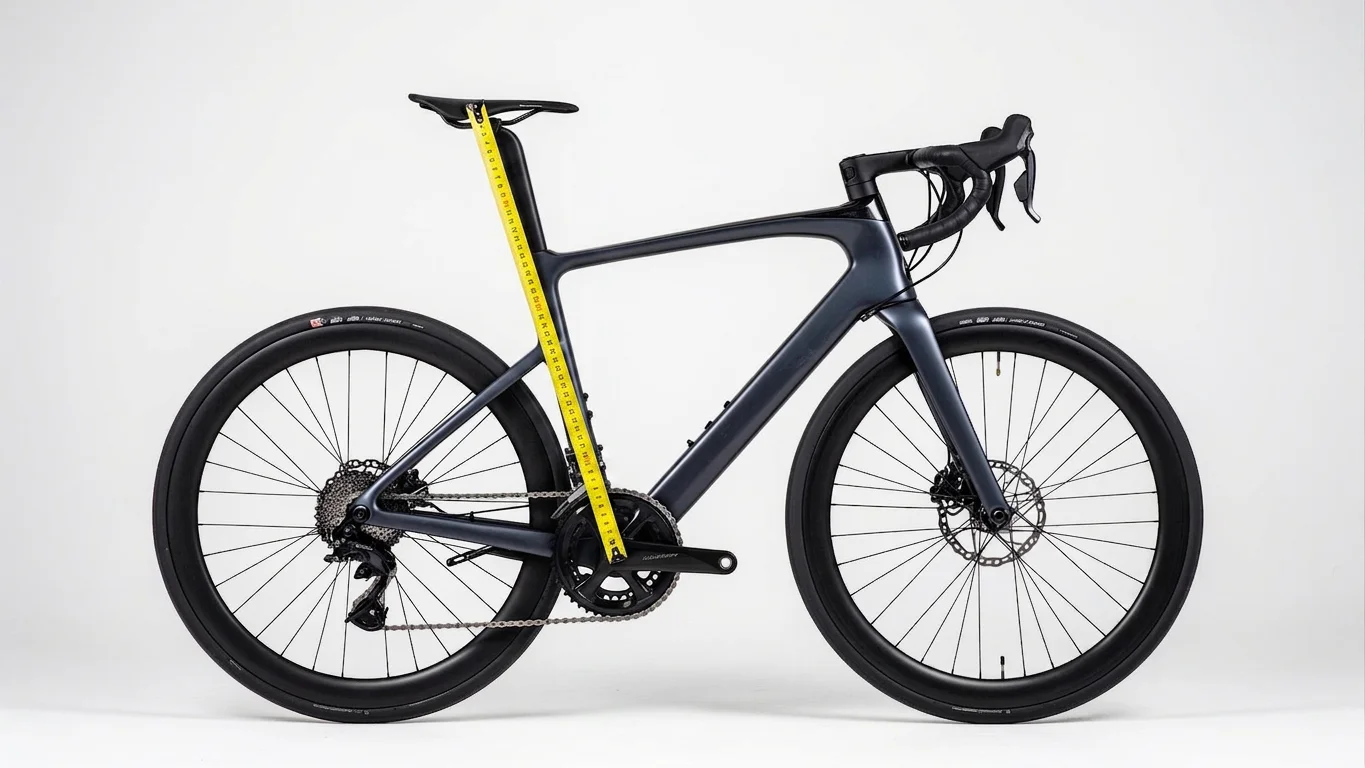
Saddle height calculator: find your optimal saddle height
Saddle height calculator — Calculate your road bike saddle height with our free calculator based on inseam, crank length and shoe size. Plus the science behind the formulas.
What is the ideal road bike position?
Road bike position — Your bike position and fit are more important than you think, and most riders don't know enough about it.
Ready to optimise your bike fit?
Get a personalised bike fitting report in just 15 minutes.
Start your bike fit