
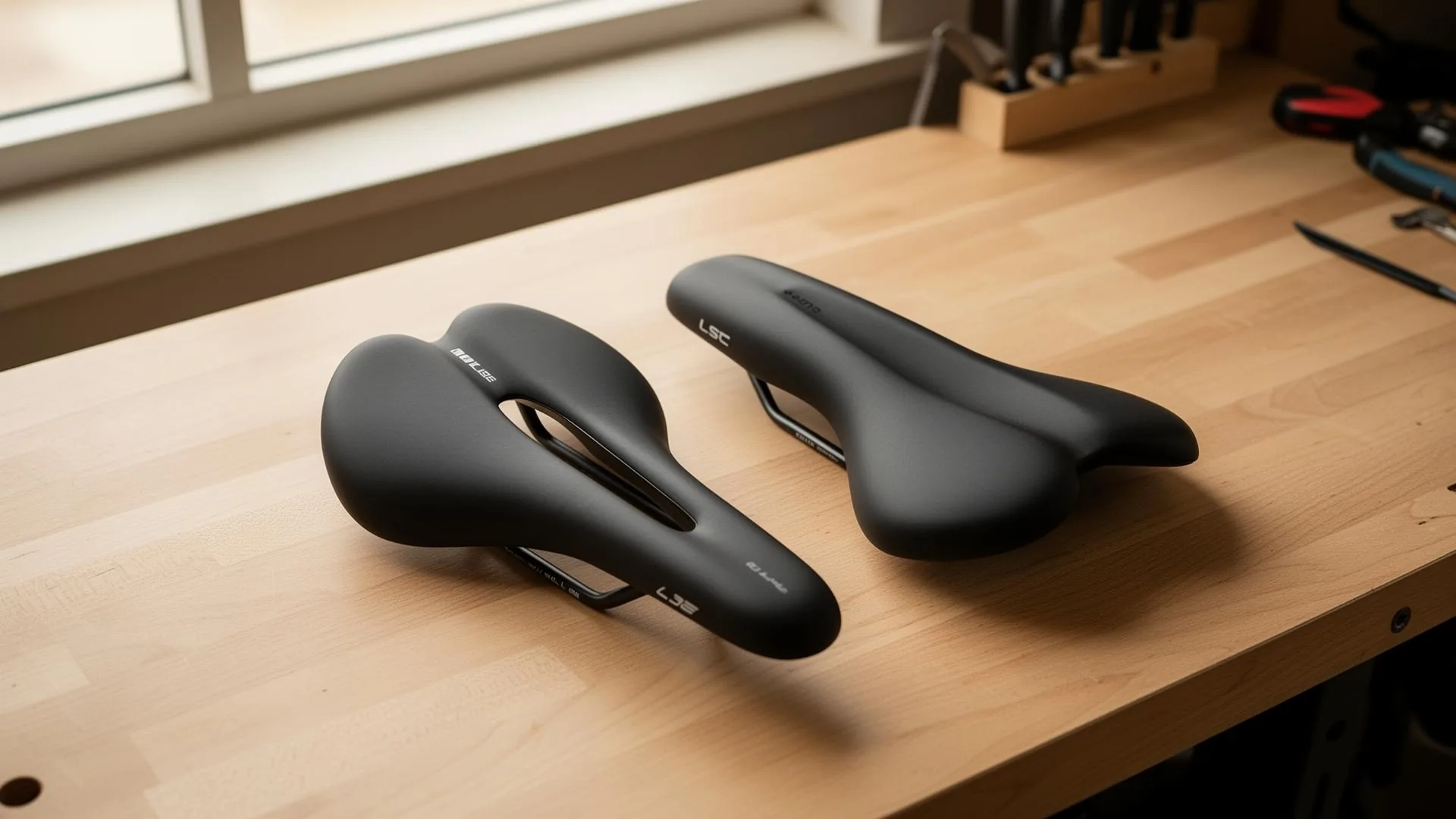
Saddle width sit bones: how to find your optimal saddle width
Saddle width: Easy instruction to determine the saddle width for a road or mountain bike.

This guide on saddle width explains everything you need to know. The correct saddle width is important for comfort. Nowadays many bicycle shops can help you determine your optimal saddle width. However, you can also easily do this yourself.
Saddle width is only a small part of your cycling position. You can also do a full online bike fit with us so that you can ride more comfortably, longer and faster.
How to measure your sit bone width
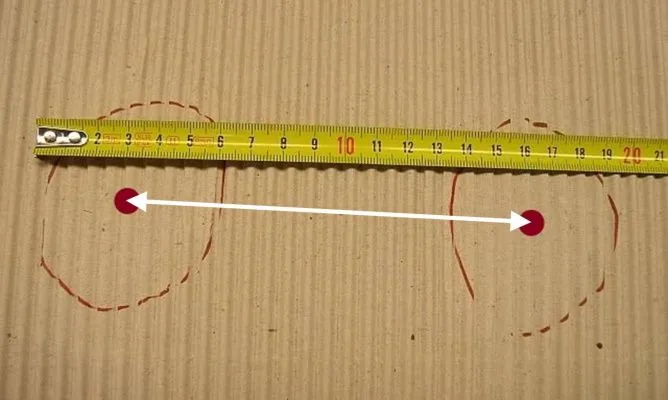
Get a piece of corrugated cardboard (or similar). Put it on a hard, stable surface such as a table. Sit on it with a straight back and make sure your sit bones leave a clear imprint (so do not wear padded bib shorts). Find the centres of the two imprints and measure the distance between them. This is your sit bone width in centimetres.
Determine your saddle width
If you have a recreational riding position (more upright), add 2 cm to the measured distance to determine your saddle width. For a sporty riding position such as on a road bike (lower handlebar), add 1 cm. For a time-trial saddle you add 0 cm.
| Sit bone width | Recreational (+2 cm) | Sporty (+1 cm) | Time trial (+0 cm) |
|---|---|---|---|
| 11 cm | 13 cm | 12 cm | 11 cm |
| 12 cm | 14 cm | 13 cm | 12 cm |
| 13 cm | 15 cm | 14 cm | 13 cm |
Symptoms of a saddle that is too narrow
If your bike saddle is too narrow, your sit bones will fall outside the support surface of the saddle. As a result, more pressure ends up on the soft central parts. This can feel very unpleasant, especially on longer rides. Common symptoms are numbness in the private parts, a painful front for women, and/or pain when urinating.
Symptoms of a saddle that is too wide
If your bike saddle is too wide, your thighs can rub against the edges of the saddle. Over time, this typically results in chafing and skin irritation in your groin.
Wider bike saddles for women
Some brands offer specific women's saddles. These are often extra wide because on average women have a wider pelvis and therefore a larger sit bone width. Always measure your own sit bones first, anatomy varies per person.
Help with other bike adjustments
We would like to also help you with the optimization of other elements of your bike setup. The most complex is finding your optimal riding position. This is complex because there is not one standard optimal position. Aerodynamics, maximum power, comfort and bike control all have different requirements for your riding position. Your personal cycling goals and priorities therefore play an important role in determining your optimal riding position.
For more explanation, please read our article What is your ideal riding position on the bike.
When determining the riding position, the positions of all your contact points (pedals, saddle, handlebars) with the bicycle are determined. In addition to the correct position, it is also important to optimise the contact points themselves. The articles behind the links below provide important tips and advice on how to do this. How do you determine your optimal:
Related articles
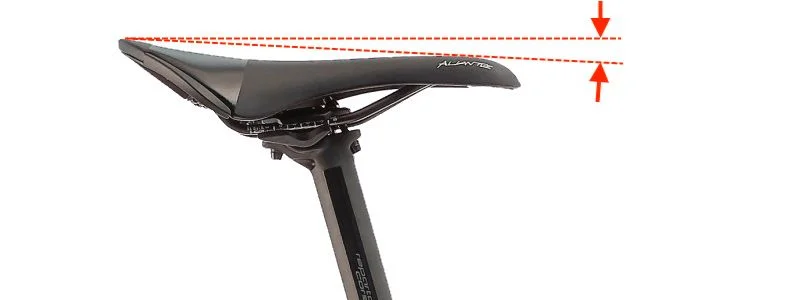
Saddle angle: how to set up your road bike or MTB saddle tilt
Saddle tilt — How to set up the saddle angle on your road bike or mountain bike, horizontal or with the nose slightly down.
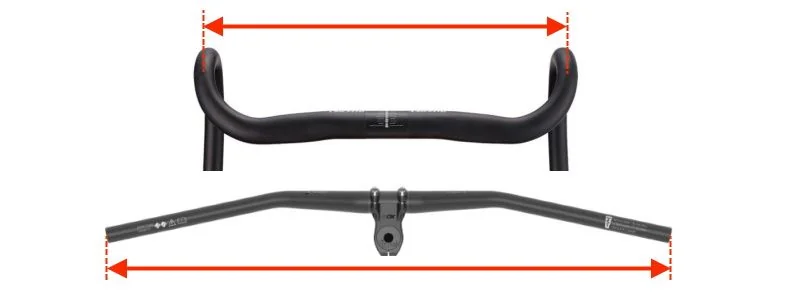
How to determine your optimal handlebar width?
Easy instruction to determine the best Handlebar width for your road bike, gravel bike or mountain bike.
Ready to optimise your bike fit?
Get a personalised bike fitting report in just 15 minutes.
Start your bike fit