
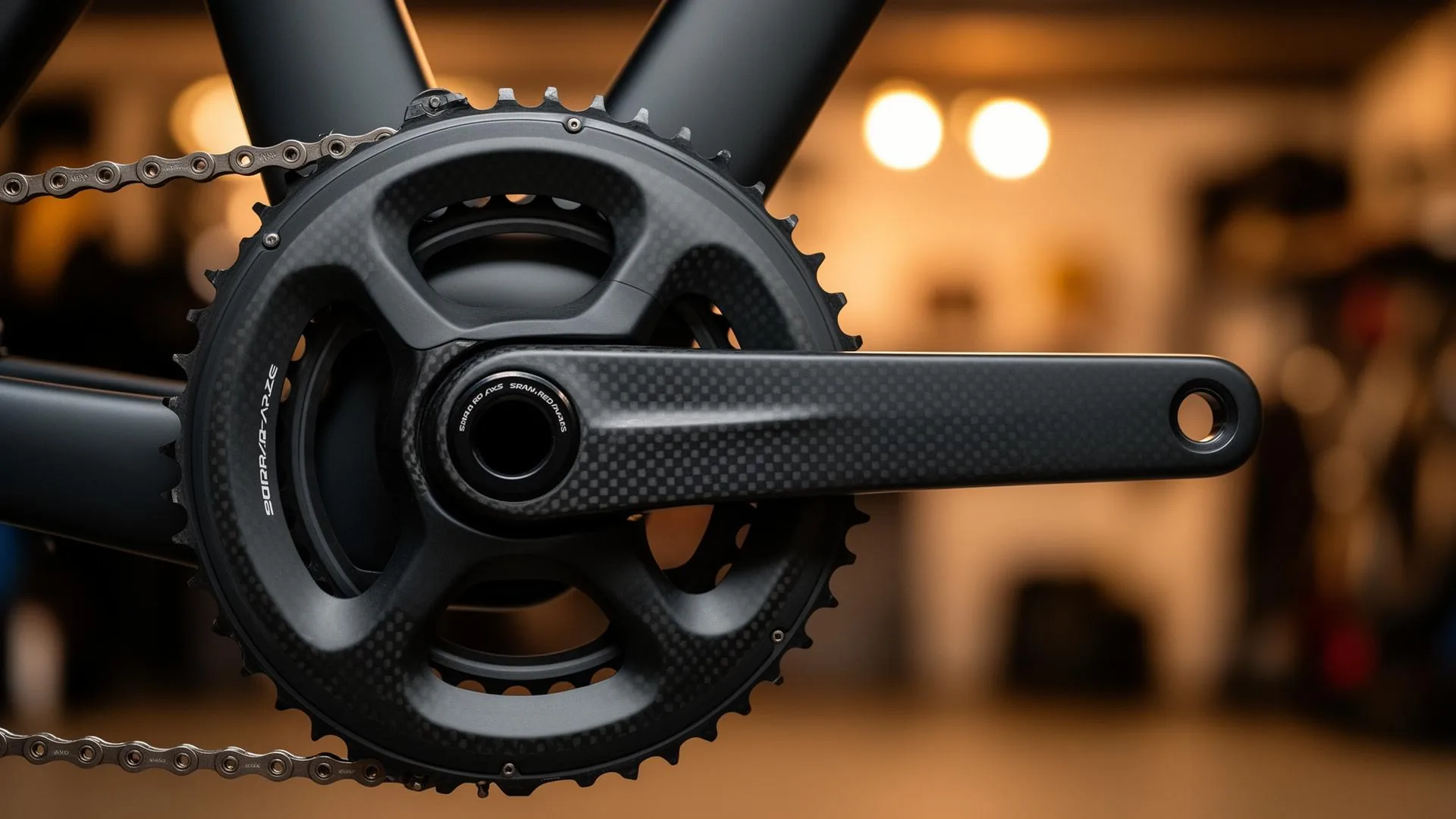
What crank length do you need?
How to measure and determine your ideal Crank length, for road bike, gravel bike or mountain bike. Includes how to measure crank arm length.

A lot of research has been done on the optimal crank length for cyclists. The result is that the ideal length is very individual and depends on many factors. The research also proves some beliefs from the past to be wrong:
- You don't need a longer crank to deliver more power
- You cannot determine your optimal crank length based on your inseam
The crank length is only a small part of your cycling position. You can also do a full online bike fit with us so that you can cycle more comfortably, longer and faster.
Practical guideline for choosing your crank length
From a practical point of view, choosing the right crank length is very easy for most cyclists. The standard crank on your bike will probably do just fine. And if you're in doubt between two crank lengths when buying a new bike, the shortest is the safest choice.
The standard crank sizes used by bicycle brands do not differ much in length (typically 165 mm to 175 mm). Most studies look at a much wider range, sometimes from 120 mm to 220 mm. And even at this larger range, the impact on the rider's performance is often very small. The difference between a 172.5 mm or 170 mm crank is usually irrelevant for a non-professional cyclist. Notably, a growing number of pros (such as Tadej Pogačar at 165 mm) now deliberately choose shorter cranks than were common before, mainly for the aerodynamic and ergonomic benefits.
There are exceptions for which adjusting the crank length is relevant. Read the rest of this article to learn more about it.
How to measure crank arm length
If you want to know which crank length is currently on your bike, there are two ways to check. The easiest: look at the inside of the crank arm. On almost all modern cranks the length is engraved or printed there, for example '170', '172.5' or '175'. This is the crank length in millimetres.
If nothing is engraved, you can measure the crank length yourself. Crank length (also called crank arm length) is the distance from the centre of the bottom bracket axle to the centre of the pedal axle, measured along the centre line of the crank arm. Use a tape measure or ruler and measure as accurately as possible between the two axles. So it is not the total length of the crank arm, but specifically the centre-to-centre distance between the two axle holes.
Insights from the crank length optimization studies
The main four insights from the different studies on crank length are:
- The higher your cadence, the shorter the optimal crank length
- A shorter crank puts less strain on the knees and hip
- With a shorter crank you can sit more aerodynamically on the bike
- The crank length has no impact on your maximum power
The higher your cadence, the shorter the optimal crank length
Both theoretical calculation studies and field studies show a strong relationship between your cadence and your optimal crank length. If you cycle at a relatively high cadence, a relatively shorter crank is more optimal for you. If you cycle at a low cadence, a slightly longer crank suits you better.
Now, the optimal cadence itself also depends on many conflicting factors and is therefore very personal. A low cadence (around 60 rpm) is the most efficient in terms of oxygen consumption per delivered watt. But at a low cadence, the muscle tension and joint load are also much higher. As a result, you tire faster and have a greater chance of overload, cramping or even injuries. That is why stage racers often ride at a high cadence so they can recover faster.
Other factors that influence your optimal cadence are your type of muscle fibres, the weight of your legs and the power at which you cycle. Fast muscle fibres, lighter legs and higher power output go hand in hand with a higher cadence.
This also explains why taller cyclists do not necessarily need a longer crank. If you are tall but with thin, light legs, cycle fast and have well-trained fast-twitch muscle fibres, you probably ride at a high cadence and a relatively shorter crank suits you better. A shorter person with sturdy legs and less training probably rides at a lower cadence and benefits from a slightly longer crank.
A shorter crank puts less strain on the knees and hip
With a shorter crank, your foot rises less far. As a result, your knees and hip don't have to make such a tight angle. The highest tension in joints occurs at the smallest angle (try squatting deeply through the knees, for example). Because these angles become less acute, peak load decreases and you have a lower risk of, for example, knee complaints.
With a shorter crank you can sit more aerodynamically on the bike
With a shorter crank, the upper legs rise less far. As a result, you can lower your upper body further and adopt a more aerodynamic position. This is mainly an advantage in time trialling and for racers who can handle a deep riding position.
The crank length has no impact on your maximum power
Jim Martin researched the influence of crank length on maximum power. The surprising conclusion is that the crank length has virtually no impact on the maximum power you can deliver. For both short and tall cyclists, the difference in maximum power was less than 1% across all common crank lengths. In his research, he even looked at cranks from 120 mm to 220 mm long, and the difference in maximum power between the shortest and longest crank was only 4%.
If you choose a different crank length based on this information, keep in mind that you'll also have to adjust your saddle and handlebar height to maintain an identical riding position.
Help with other bike adjustments
We would like to also help you with the optimization of other elements of your bike setup. The most complex is finding your optimal riding position. This is complex because there is not one standard optimal position. Aerodynamics, maximum power, comfort and bike control all have different requirements for your riding position. Your personal cycling goals and priorities therefore play an important role in determining your optimal riding position.
For more explanation, please read our article What is your ideal riding position on the bike.
When determining the riding position, the positions of all your contact points (pedals, saddle, handlebars) with the bicycle are determined. In addition to the correct position, it is also important to optimise the contact points themselves. The articles behind the links below provide important tips and advice on how to do this. How do you determine your optimal:
Related articles
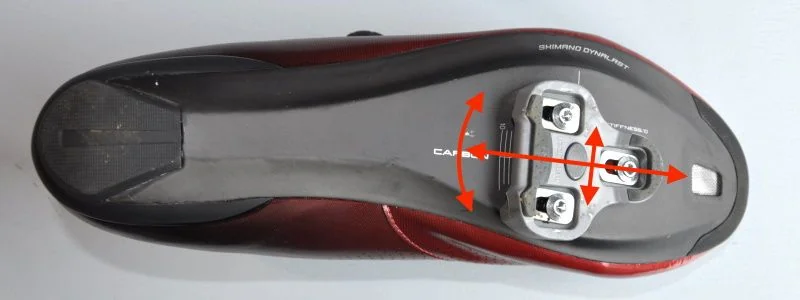
Cleat position road bike: how to set up your cleats
Cleat position road bike — How to nail correct cleat position on a road bike or MTB: step-by-step cleat placement for SPD and Look pedals (length, rotation, width).
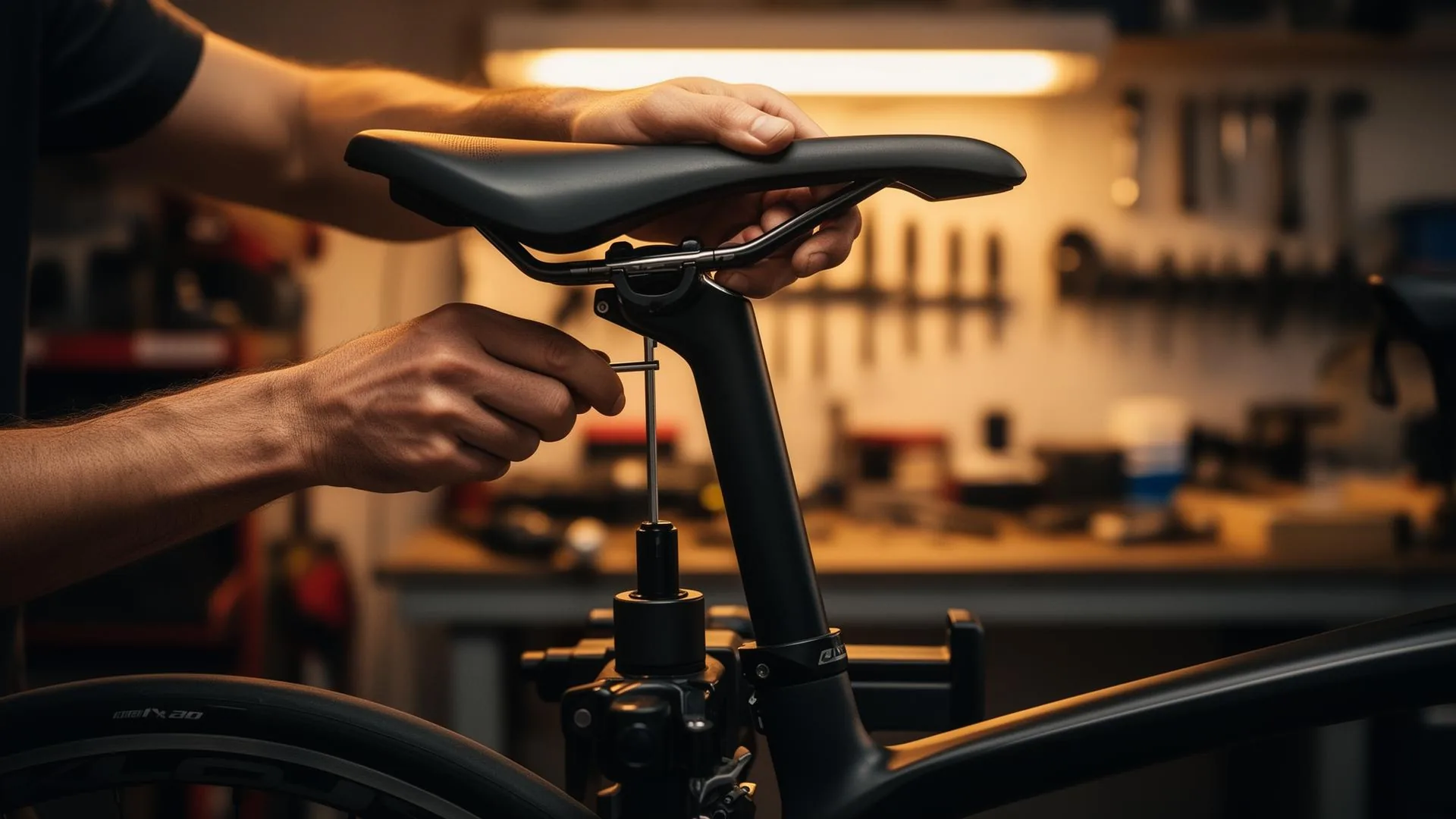
Road bike saddle setup: saddle height and setback guide
Road bike saddle setup, step by step: correct saddle height, saddle tilt and setback for your body. Prevent pains and ride faster with the right setup.
Ready to optimise your bike fit?
Get a personalised bike fitting report in just 15 minutes.
Start your bike fit